Introduction
In Pakistan, becoming a tax filer is no longer just about civic duty — it has become a practical and financially rewarding decision. The truth is, most people do not file tax returns out of love for paying taxes. They do it because the financial benefits of filer status are real, measurable, and significant.
If you are a non-filer in Pakistan, you are paying higher tax rates on dozens of everyday transactions — property purchases, vehicle registrations, bank profits, dividends, international card payments, and more. These extra costs add up to tens or even hundreds of thousands of rupees every year. Filer status eliminates most of these extra costs legally and immediately.
This article explains exactly why people in Pakistan become filers, who benefits the most, what specific savings are available, and what the process looks like — so you can make an informed decision about your own tax status.
Bottom Line: People become filers in Pakistan not necessarily to pay more tax — but to pay less tax on their transactions, avoid non-filer penalties, and access the full range of financial and legal benefits that filer status provides.
Who Is a Filer in Pakistan?
A filer is a taxpayer whose name appears on the Active Taxpayers List (ATL) published by the Federal Board of Revenue (FBR). To be included on the ATL, a person must:
- Have a valid NTN (National Tax Number) registered on FBR IRIS — linked to their CNIC
- File their annual income tax return for the relevant tax year before the ATL cut-off date
- File a wealth statement if applicable (required when annual income exceeds the prescribed threshold)
The ATL is updated weekly by FBR. Once your return is filed and processed, your name appears on the ATL — and from that point, all filer rates and benefits apply to your transactions automatically, based on your CNIC or NTN.
If you are not on the ATL, you are treated as a non-filer — and higher withholding tax rates, double advance tax deductions, and various restrictions apply to your financial transactions throughout the year.
Why People Become Filers — The Main Categories
1. Investors — Lower Tax on Bank Profits and Savings
Pakistan has a large population of savers and investors who keep significant amounts in bank savings accounts, term deposits, profit and loss sharing (PLS) accounts, prize bonds, and investment certificates. All profit earned on these instruments is subject to withholding tax under Section 151 of the Income Tax Ordinance, 2001.
The difference between filer and non-filer rates on bank profit is dramatic:
| Status | Section 151 Rate | Tax on Rs. 500,000 Profit |
|---|---|---|
| Filer | 20% | Rs. 100,000 |
| Non-Filer | 40% | Rs. 200,000 |
A person earning Rs. 500,000 per year in bank profit saves Rs. 100,000 annually simply by being a filer. For those with large deposits or multiple accounts, this saving compounds into lakhs per year — making filer status a high-return financial decision for investors.
2. Property Buyers — Lower Advance Tax on Purchase
Purchasing immovable property in Pakistan involves advance tax collection under Section 236K at the time of registration. The rates for tax year 2025-26 are:
| Status | Section 236K Rate | Tax on Rs. 10 Million Property |
|---|---|---|
| Filer | 1.5% | Rs. 150,000 |
| Late Filer | 4.5% | Rs. 450,000 |
| Non-Filer | 10.5% | Rs. 1,050,000 |
A filer buying a Rs. 10 million property saves Rs. 900,000 compared to a non-filer on that single transaction. For frequent property buyers or investors purchasing multiple properties, the cumulative saving is enormous.
3. Property Sellers — Lower Advance Tax on Sale
Selling property involves advance tax collection under Section 236C at the time of transfer. The rates for tax year 2025-26 are:
| Status | Section 236C Rate | Tax on Rs. 10 Million Sale |
|---|---|---|
| Filer | 4.5% | Rs. 450,000 |
| Late Filer | 7.5% | Rs. 750,000 |
| Non-Filer | 11.5% | Rs. 1,150,000 |
A filer selling a Rs. 10 million property saves Rs. 700,000 compared to a non-filer. Combined with the savings on the purchase side (Section 236K), a property investor involved in a full buy-and-sell cycle of a Rs. 10 million property saves over Rs. 1,600,000 simply by being a filer.
4. Vehicle Buyers — Lower Advance Tax on Registration
When registering a new locally manufactured vehicle, advance tax is collected under Section 231B based on engine capacity. Filers pay significantly lower rates than non-filers. For popular mid-range vehicles (1000cc to 1300cc), the difference in advance tax between filer and non-filer status can amount to tens of thousands of rupees on a single vehicle registration.
For families purchasing multiple vehicles or businesses maintaining vehicle fleets, filer status provides recurring and compounding savings on registration costs.
5. Dividend Investors — Lower Tax on Investment Returns
Investors holding shares in listed companies or units of mutual funds receive dividend income. Under Section 150, withholding tax on dividends is:
- Filer: 15% on dividend income
- Non-Filer: 30% on dividend income
A person receiving Rs. 300,000 in annual dividend income pays Rs. 45,000 as a filer versus Rs. 90,000 as a non-filer — saving Rs. 45,000 per year on dividends alone. For regular stock market investors, this saving is significant and recurring.
6. International Travellers and Online Shoppers — Lower Card Payment Tax
Under Section 236Y, advance tax is collected on international payments made through Pakistani credit, debit, and prepaid cards:
- Filer: 5% on international card payments
- Non-Filer: 10% on international card payments
For professionals, students paying foreign university fees, frequent travellers, or anyone with regular international online purchases, filer status directly reduces the cost of every transaction by half at the advance tax stage.
7. Business Owners and Freelancers — Lower Section 153 Withholding
Businesses receiving payments for goods, services, or contracts are subject to withholding tax under Section 153 by their clients (prescribed persons). Filers pay lower rates than non-filers on every such payment received. For service businesses receiving multiple payments throughout the year, this adds up to a substantial reduction in advance tax deducted from their income.
8. Salaried Employees — Tax Refunds
Many salaried individuals have excess tax deducted by their employers due to mid-year salary changes, allowances, or bonuses. Only filers can claim refunds of excess tax deducted through their annual income tax return. Non-filers who never file a return permanently lose any excess tax that was deducted — with no mechanism to recover it.
9. Cash Withdrawal — Zero Tax for Filers
Under Section 231A, non-filers pay 0.8% withholding tax on cash withdrawals from banks exceeding Rs. 50,000 per day. Filers are completely exempt from this deduction. For businesses that regularly withdraw cash for operations, this saving is continuous and directly reduces banking costs.
Complete Comparison — Filer vs Non-Filer at a Glance
| Transaction Type | Section | Filer Rate | Non-Filer Rate |
|---|---|---|---|
| Salary | 149 | Slab rates | Higher rates apply |
| Dividends | 150 | 15% | 30% |
| Bank Profit on Debt | 151 | 20% | 40% |
| Cash Withdrawal | 231A | 0% | 0.8% |
| Vehicle Registration | 231B | Lower rate | Higher rate |
| Property Purchase | 236K | 1.5% | 10.5% |
| Property Sale | 236C | 4.5% | 11.5% |
| International Card Payments | 236Y | 5% | 10% |
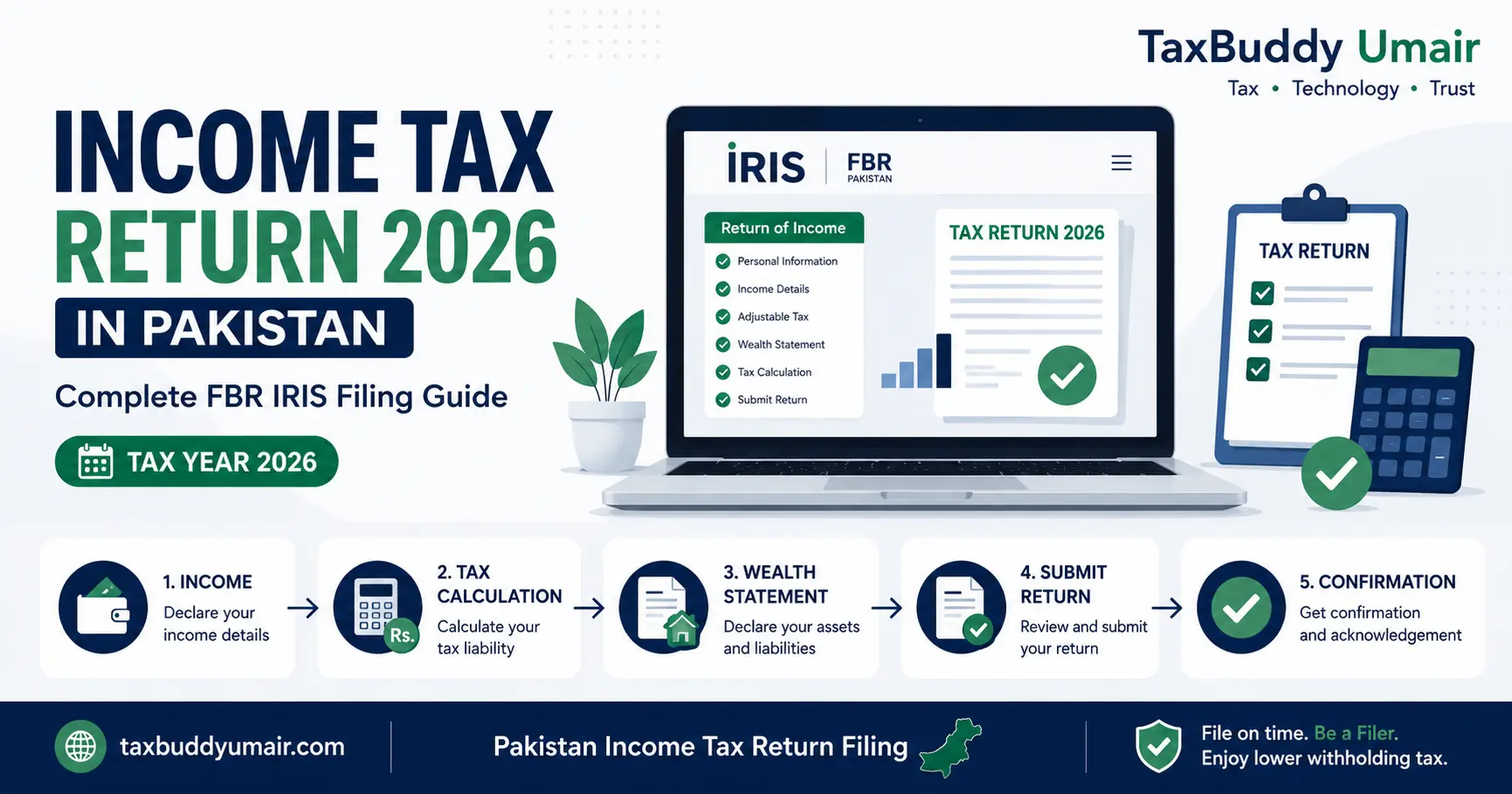
How to Become a Filer — Step by Step
-
Register on FBR IRIS
Visit iris.fbr.gov.pk and register using your CNIC. Your NTN is automatically created. -
Gather Your Financial Information
Collect salary slips or business income records, bank statements, property documents, and any other income information for the tax year (July 1 to June 30). -
File Your Income Tax Return
Log in to IRIS, select the income tax return form for the relevant year, declare all sources of income, and submit. Even a Nil Return (zero income) qualifies you for the ATL. -
Verify ATL Status
Check your ATL status on FBR's website or send your CNIC (without dashes) as SMS to 9966. ATL is updated every Monday. -
File Every Year
The deadline is September 30 each year for salaried individuals and AOPs. Filing every year maintains your ATL status continuously.
Frequently Asked Questions (FAQs)
Q1: I have no taxable income. Can I still become a filer?
Yes. File a Nil Return on FBR IRIS — declare zero income (or income below the taxable threshold). You will appear on the ATL and enjoy all filer benefits across property, banking, vehicle, and other transactions. This is the most cost-effective thing you can do financially.
Q2: How quickly does ATL status take effect after filing?
The ATL is updated every Monday. After filing your return, your name typically appears on the ATL within 7 to 10 days. Once on the ATL, the lower filer rates apply to all subsequent transactions.
Q3: If I become a filer, will I have to pay a lot of tax?
Not necessarily. If your income is below the taxable threshold (Rs. 600,000 for salaried individuals), your income tax is zero. Filing a Nil Return costs nothing in tax — but gives you full filer benefits worth potentially lakhs of rupees in savings on property, banking, and other transactions.
Q4: Is filer status permanent once obtained?
No. ATL status must be maintained by filing a return every year. If you miss a year, you drop off the ATL and lose filer benefits until you file again. Regular annual filing is the only way to maintain continuous filer status.
Q5: Can a housewife or student become a filer?
Yes. Anyone with a CNIC can obtain an NTN and file a Nil Return. A housewife with a bank account or property in her name benefits significantly from filer status — lower bank profit tax, lower property transaction rates. Students making international online payments benefit from the lower Section 236Y rate.
Q6: What is the penalty for not filing when required?
Under Section 182 of the ITO 2001, a minimum penalty of Rs. 1,000 applies for late or non-filing. More significantly, the financial cost of non-filer status — through higher withholding rates across dozens of transactions — typically far exceeds any penalty amount.
Conclusion
People in Pakistan become filers primarily because of the direct and immediate financial benefits — not out of abstract civic obligation. Lower tax rates on property purchases and sales, bank profits, dividends, vehicle registration, international payments, and cash withdrawals translate into real, measurable savings that can reach hundreds of thousands of rupees annually for active investors and property transactors.
The process of becoming a filer is straightforward, free, and takes less than an hour on FBR IRIS. The annual filing requirement — even a Nil Return — is a small time investment that pays dividends throughout the year on every major financial transaction.
In today's Pakistan, being a non-filer is increasingly an expensive choice — not a neutral one.
Disclaimer: This article is for educational purposes only. Tax rates are subject to change through Finance Acts. Consult a qualified FBR-registered tax practitioner for personalised guidance.
Ready to become a filer? Contact Umair Mubeen — FBR-registered tax consultant based in Karachi. Return filing from PKR 2,000. WhatsApp: +92 333 248 2742


💬 Comments 0
No comments yet. Be the first to share your thoughts!
✍️ Leave a Comment
Your comment will be reviewed before publishing. Please keep it relevant and respectful.