Most Pakistanis assume that if they own property or a vehicle, they are automatically required to file an income tax return. However, Section 115 of the Income Tax Ordinance, 2001 provides important relief for certain categories of persons — even if they meet the ownership criteria listed under Section 114(1)(b)(iii) to (vi).
This guide explains who is NOT required to file a return of income under Section 115, and which persons are specifically exempted from the ownership-based filing requirement.
Key Point: Section 115 overrides Section 114(1)(b)(iii) to (vi). If you fall under the Section 115 exempted categories, the ownership criteria of Section 114(1)(b) do NOT apply to you — even if you own property above 500 square yards or a vehicle above 1000cc.
What is Section 114(1)(b)(iii) to (vi)?
Under Section 114(1)(b) of the ITO 2001, certain persons are required to file an income tax return based on their ownership of assets — regardless of whether they have taxable income. The relevant sub-clauses (iii) to (vi) cover persons who:
- (iii) Own immovable property of 500 square yards or more located within municipal limits existing immediately before the commencement of Local Government laws in the provinces, Cantonment areas, or Islamabad Capital Territory
- (iv) Own immovable property of 500 square yards or more located in a rating area
- (v) Own a flat with covered area of 2,000 square feet or more located in a rating area
- (vi) Own a motor vehicle with engine capacity above 1,000cc
These provisions were introduced to widen the tax base and bring property and vehicle owners into the tax net. However, Section 115 carves out an important exception for vulnerable and special categories of persons.
Section 115 — Who is NOT Required to File?
Section 115 of the ITO 2001 states that the following persons are NOT required to furnish a return of income solely due to the ownership criteria mentioned in Section 114(1)(b)(iii) to (vi):
| Category | Condition | Section 114 Override |
|---|---|---|
| Widow | Any widow — no additional condition | Exempt ✅ |
| Orphan | Below 25 years of age | Exempt ✅ |
| Disabled Person | Any disabled person — no additional condition | Exempt ✅ |
| Non-Resident | For immovable property ownership only | Exempt ✅ |
Important: Section 115 exemption applies only to the ownership-based filing requirement under Section 114(1)(b)(iii) to (vi). If any of these persons have taxable income exceeding Rs. 600,000, they are still required to file a return under Section 114(1)(a).
Practical Examples
Example 1 — Widow owning a house
Mrs. Fatima is a widow in Karachi who owns a house of 600 square yards. She has no income — no salary, no business, no rental income. Under Section 114(1)(b)(iii), she would normally be required to file a tax return due to owning property above 500 square yards. However, Section 115 exempts her from this requirement. Mrs. Fatima is NOT required to file a return.
Example 2 — Orphan below 25 owning a flat
Ahmed is 22 years old and an orphan. He inherited a flat of 2,500 square feet in a rating area from his parents. He is a student with no income. Under Section 114(1)(b)(v), he would normally need to file a return. However, since he is an orphan below 25, Section 115 exempts him. Ahmed is NOT required to file a return.
Example 3 — Disabled person owning a car above 1000cc
Mr. Hassan is a disabled person who owns a 1300cc car. He has no taxable income. Under Section 114(1)(b)(vi), he would normally need to file a return due to owning a vehicle above 1000cc. Section 115 exempts him. Mr. Hassan is NOT required to file a return.
Example 4 — Non-resident owning property
Mr. Ali is a Pakistani living in Dubai (non-resident). He owns a plot in Islamabad of 1,000 square yards. Under Section 114(1)(b)(iii), he would normally need to file a return. Section 115 exempts him from this requirement for immovable property ownership. Mr. Ali is NOT required to file a return solely on account of property ownership.
Who is Still Required to File — Despite Section 115
Section 115 exemption is not absolute. The following persons must still file a return regardless of Section 115, because they fall under other clauses of Section 114(1):
- Charged to tax in preceding two years: Any person who has been charged to tax in respect of any of the two preceding tax years must file — even if they are a widow, orphan, or disabled person
- Loss carry forward: Any person claiming a loss carried forward under the Ordinance must file a return
- Income above threshold: Any person whose taxable income exceeds Rs. 600,000 must file under Section 114(1)(a)
Key Rule: Section 115 only overrides Section 114(1)(b)(iii) to (vi) — the asset ownership criteria. It does NOT override Section 114(1)(a) (income threshold) or Section 114(1)(b)(i) and (ii) (previously taxed / loss carry forward).
Important Limitations of Section 115 Exemption
The Section 115 exemption is limited in scope. It only overrides the ownership-based filing requirement under Section 114(1)(b)(iii) to (vi). The following situations still require filing:
- Taxable income above threshold: If a widow, orphan, disabled person, or non-resident has income exceeding Rs. 600,000, they must still file a return under Section 114(1)(a) — the income-based requirement.
- Orphan above 25: Once an orphan turns 25, the Section 115 exemption no longer applies. They become subject to the normal Section 114(1)(b) requirements.
- Non-resident and vehicle: The non-resident exemption under Section 115 applies only to immovable property. If a non-resident also owns a vehicle above 1000cc in Pakistan, Section 115 may not cover the vehicle-related requirement.
- Voluntary filing still beneficial: Even exempt persons can voluntarily file returns to appear on the ATL and benefit from lower withholding tax rates on property transactions, banking, and other dealings.
Why You Should Still Consider Filing Voluntarily
Even if Section 115 exempts you from filing, there are strong reasons to file voluntarily:
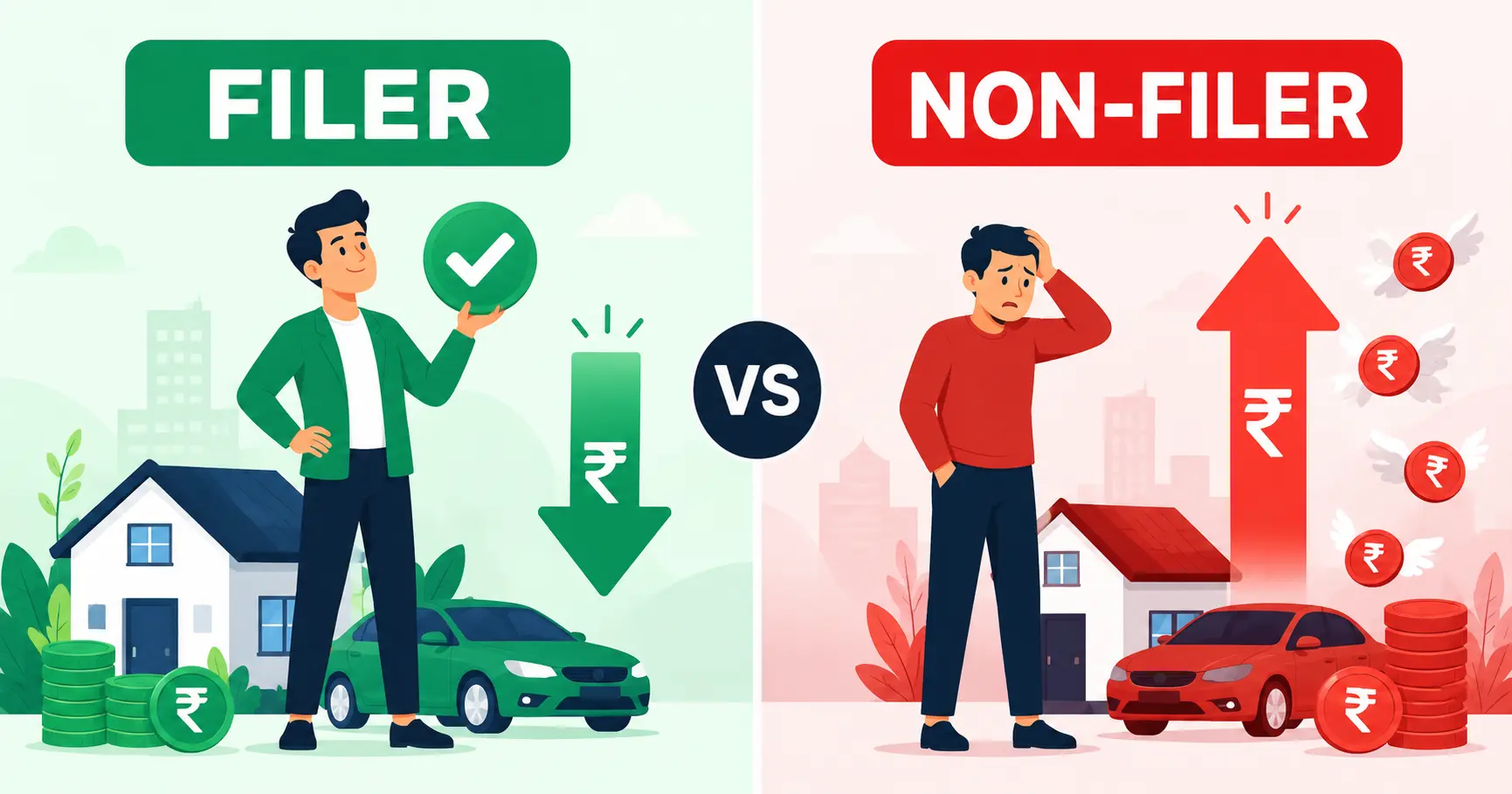
- ATL status: Filing makes you an Active Filer — you pay 4.5% instead of 11.5% when selling property (Section 236C)
- Bank profit: Filers pay 20% instead of 40% on bank profit (Section 151)
- Property purchase: Filers pay 1.5% instead of 10.5% advance tax (Section 236K)
- Financial credibility: Tax returns are required for bank loans, visa applications, and business registrations
Bottom Line: Section 115 provides meaningful relief for widows, orphans below 25, disabled persons, and non-residents from the asset-based filing requirement. However, if any of these persons have income above the taxable threshold — or want to benefit from lower withholding tax rates — filing a return is still the smart choice.
Summary Table
| Person | Section 114(1)(b) Applies? | Section 115 Override? | Must File if Income > 600K? |
|---|---|---|---|
| Widow | Yes — normally | Yes — Exempt | Yes |
| Orphan (below 25) | Yes — normally | Yes — Exempt | Yes |
| Disabled Person | Yes — normally | Yes — Exempt | Yes |
| Non-Resident (property) | Yes — normally | Yes — Exempt | Yes |
| Regular Person | Yes | No — Must File | Yes |
Disclaimer: This article is for educational purposes only. Tax laws change through Finance Acts and FBR notifications. Always verify from FBR's official portal at fbr.gov.pk or consult a qualified tax practitioner.


💬 Comments 0
No comments yet. Be the first to share your thoughts!
✍️ Leave a Comment
Your comment will be reviewed before publishing. Please keep it relevant and respectful.