Introduction
Every month, millions of domestic electricity consumers in Pakistan receive their electricity bills — and many do not realise that a portion of that bill includes an advance income tax deduction under Section 235 of the Income Tax Ordinance, 2001. This advance tax is automatically added to the electricity bill by the power distribution company (DISCO) and collected along with the electricity charges.
However, the law provides an important exemption for specific domestic consumers who meet prescribed conditions. If you are a registered taxpayer with a valid NTN, file your return on time, appear on FBR's Active Taxpayer List, and the electricity meter is in your name — you may be completely exempt from this advance tax on your electricity bill.
This article explains who qualifies for the exemption, what conditions must be met, how the exemption works in practice, and what happens if any condition is not satisfied.
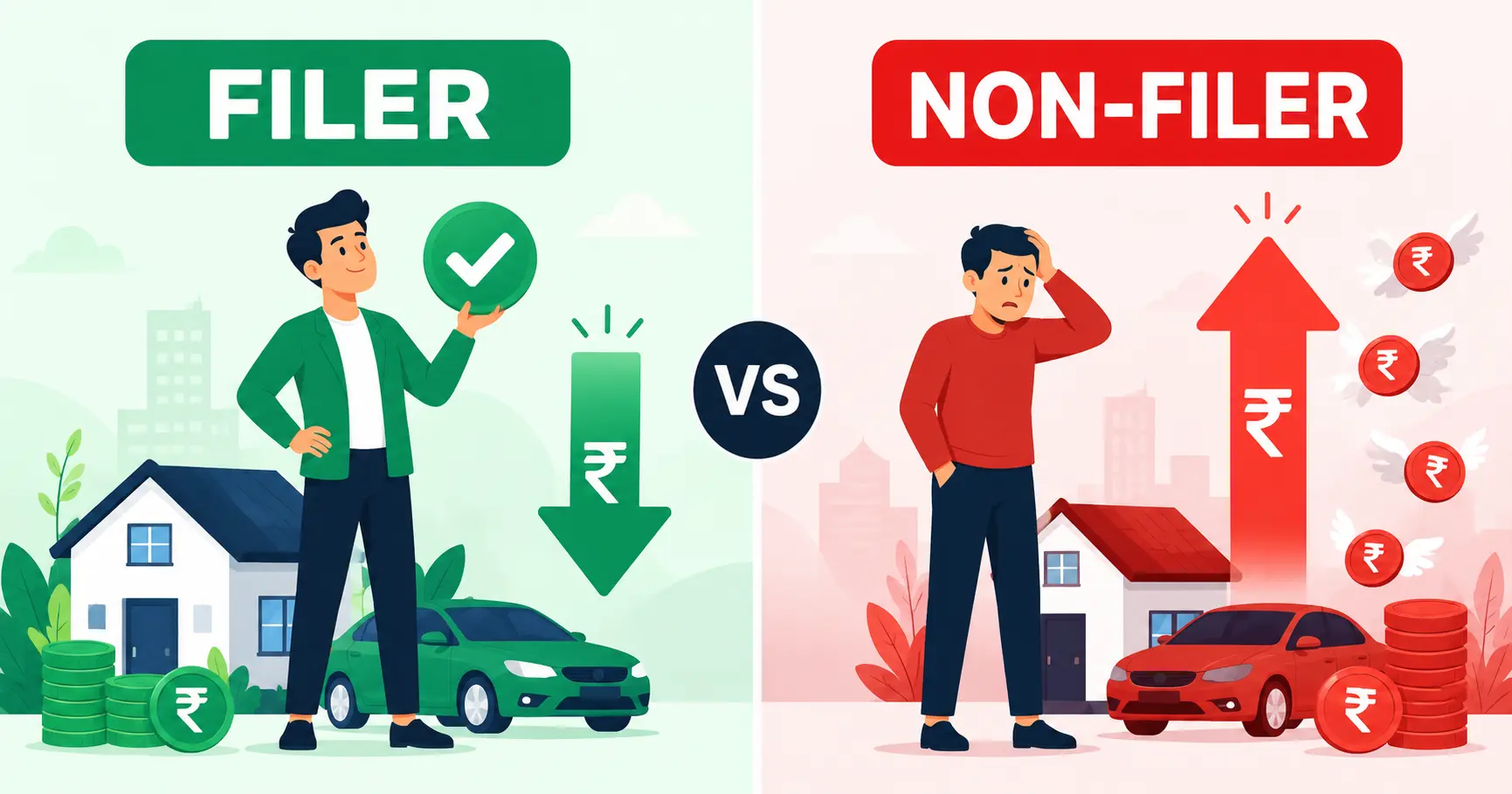
Good News for Filers: If you are a domestic electricity consumer with an NTN, file your return on time, appear on the ATL, and the meter is in your name — you are not liable to pay income tax on your electricity bill under Section 235 of the Income Tax Ordinance, 2001.
Legal Basis — Section 235, Income Tax Ordinance, 2001
Section 235 of the Income Tax Ordinance, 2001 requires every electricity supply company (DISCO — Distribution Company) to collect advance income tax from consumers at the time of issuing electricity bills. This advance tax is included in the bill amount and collected along with electricity charges.
The section applies to both commercial and domestic consumers — but the law provides specific exemptions for certain domestic consumers who meet all the prescribed conditions simultaneously. For eligible domestic consumers, the advance tax under Section 235 is simply not charged — it does not appear on their electricity bill at all.
Who Is Exempt from Section 235 Electricity Tax?
A domestic electricity consumer is exempt from advance income tax under Section 235 if all four of the following conditions are satisfied simultaneously:
| # | Condition | Detail |
|---|---|---|
| 1 | Valid NTN | You must have a valid National Tax Number (NTN) registered with FBR |
| 2 | Return Filed on Time | You must file your annual income tax return before the due date (September 30) |
| 3 | Appears on ATL | Your name must appear on FBR's Active Taxpayer List (ATL) — updated weekly |
| 4 | Meter in Your Name | The electricity meter at your premises must be registered in your name with the DISCO |
Important: All four conditions must be satisfied at the same time. If even one condition is missing — for example, the meter is in a family member's name instead of yours — the exemption does not apply and advance tax will be charged on your electricity bill.
Condition 1 — Valid NTN (National Tax Number)
An NTN is your unique income tax registration number issued by FBR. In Pakistan, an NTN is automatically linked to your CNIC when you register on FBR's IRIS portal at iris.fbr.gov.pk. Registration is free and takes only a few minutes.
Without a valid NTN, the exemption cannot apply — you will not be identifiable in FBR's system for the DISCO to verify your tax status.
Condition 2 — Income Tax Return Filed Within Due Date
Simply having an NTN is not enough. You must also have filed your annual income tax return within the prescribed due date — September 30 for most individuals. Late filing or non-filing means you do not qualify for the exemption even if you have an NTN.
This condition emphasises that the exemption is specifically for compliant taxpayers — those who fulfil their filing obligations on time. A late filer who files after September 30 does not meet this condition for that tax year.
Condition 3 — Appears on Active Taxpayer List (ATL)
The ATL is FBR's publicly available list of taxpayers who have filed their returns on time. Your name must appear on the ATL for the exemption to apply. The ATL is updated every Monday by FBR.
You can verify your ATL status by:
- Visiting www.fbr.gov.pk — ATL search section
- Sending your CNIC (without dashes) as SMS to 9966
DISCOs verify ATL status through FBR's integrated system — if your CNIC or NTN is not on the ATL, the system automatically includes the advance tax in your bill.
Condition 4 — Electricity Meter Registered in Your Name
The electricity meter at the domestic premises must be officially registered in your name with the relevant DISCO (HESCO, LESCO, IESCO, PESCO, MEPCO, QESCO, SEPCO, FESCO, etc.). This means:
- The meter connection was taken in your name
- Your CNIC is registered with the DISCO for that meter
- The electricity bill is issued in your name
If the meter is in a parent's, spouse's, or landlord's name — even if you are paying the bill — the exemption applies to that person (the meter holder), not to you. The exemption follows the meter registration, not the bill payer.
Practical Example
Example 1 — All Conditions Met (Exempt)
Mr. Fahad has an NTN, files his return every year before September 30, appears on the ATL, and the electricity meter at his home is in his name. His monthly electricity bill is Rs. 8,000.
| Check | Status |
|---|---|
| Valid NTN? | Yes |
| Return filed on time? | Yes — filed by September 30 |
| Appears on ATL? | Yes |
| Meter in his name? | Yes |
| Section 235 Tax on Bill | Nil — Fully Exempt |
Example 2 — Meter in Father's Name (Not Exempt)
Mr. Bilal has an NTN, files his return on time, and is on the ATL. However, the electricity meter at his house is in his father's name. His father does not have an NTN.
| Check | Status |
|---|---|
| Valid NTN? (meter holder — father) | No — father has no NTN |
| Section 235 Tax on Bill | Charged — Not Exempt |
Even though Mr. Bilal is a filer, the exemption does not apply because the meter is in his father's name and his father does not have an NTN. The exemption checks are performed against the meter holder's CNIC — not the person paying the bill.
Example 3 — Late Filer (Not Exempt)
Ms. Sara has an NTN and the meter is in her name, but she filed her income tax return in November (after the September 30 deadline). She appears on the ATL as a late filer.
| Check | Status |
|---|---|
| Return filed on time? | No — filed late (after September 30) |
| Section 235 Tax on Bill | Charged — Condition 2 not met |
How to Get the Exemption Applied on Your Bill
-
Get your NTN
Register on FBR IRIS at iris.fbr.gov.pk using your CNIC. NTN is issued instantly and free. -
File your return on time
File your annual income tax return before September 30. Even a Nil Return qualifies. -
Confirm your ATL status
SMS your CNIC to 9966 or check on www.fbr.gov.pk to confirm you appear on the ATL. -
Register your CNIC with your DISCO
Visit your DISCO's customer service office and register your CNIC against your electricity meter connection. This links your meter to your NTN in FBR's system. -
Verify on next bill
Once your CNIC is linked to the meter and your ATL status is confirmed, the advance tax should stop appearing on your next electricity bill.
Frequently Asked Questions (FAQs)
Q1: If I am a filer but the meter is in my spouse's name, can I claim the exemption?
No. The exemption is linked to the meter holder. If the meter is in your spouse's name, your spouse must have an NTN, file their return on time, and appear on the ATL for the exemption to apply. Consider getting the meter transferred to your name or ensuring your spouse also becomes a filer.
Q2: Is the advance tax under Section 235 adjustable in my annual return?
Yes. If advance tax under Section 235 is deducted from your electricity bill, it is an adjustable advance tax — it can be credited against your annual income tax liability when you file your return. If the deducted amount exceeds your final tax liability, the excess is refundable.
Q3: What if my DISCO is still charging tax even though I meet all conditions?
Visit your DISCO's customer service centre with your NTN certificate, ATL verification printout, and CNIC. Request that your CNIC be linked to your meter connection in their system. If the problem persists, contact the Pakistan Citizen Portal or file a complaint with NEPRA (National Electric Power Regulatory Authority).
Q4: Does this exemption apply to commercial meters?
Section 235 applies to both domestic and commercial consumers. However, the specific exemption conditions discussed in this article apply to domestic consumers. Commercial consumers have different rules and the advance tax on commercial electricity bills is generally treated as adjustable income tax regardless of filer status.
Q5: My monthly electricity bill is very low — does Section 235 still apply?
Section 235 advance tax generally applies when the monthly electricity bill exceeds a prescribed threshold. For very low consumption domestic consumers, the advance tax may not apply regardless of ATL status. Check your electricity bill for any income tax line item — if it is not showing, you may already be below the applicable threshold.
Conclusion
Section 235 of the Income Tax Ordinance, 2001 provides a meaningful exemption from advance income tax on electricity bills for domestic consumers who are compliant taxpayers. The four conditions — valid NTN, timely return filing, ATL appearance, and meter in your name — must all be met simultaneously.
For most compliant filers who own their home or whose meter is in their name, this exemption is straightforward to claim. For those living in rented accommodation where the meter is in the landlord's name, the exemption does not apply — but the advance tax deducted remains adjustable in the annual return.
The practical takeaway: file your return on time, appear on the ATL, register your CNIC with your DISCO, and stop paying unnecessary advance tax on your monthly electricity bill.
Disclaimer: This article is for educational purposes only and does not constitute professional tax advice. Tax laws are subject to change. Consult a qualified FBR-registered tax practitioner for personalised guidance.
Need help with NTN registration, return filing, or electricity tax exemption? Contact Umair Mubeen — Tax Educator based in Karachi. WhatsApp: +92 333 248 2742


💬 Comments 0
No comments yet. Be the first to share your thoughts!
✍️ Leave a Comment
Your comment will be reviewed before publishing. Please keep it relevant and respectful.